


VGV Wingspan
An agentic engineering workflow for AI coding agents.
Wingspan gives AI-assisted coding four deliberate phases: brainstorm, plan, build, and review. Each change runs only the ones it needs. It’s open source, it runs in Claude Code, Codex, Gemini CLI, and other coding agents, and it encodes the engineering practices we use every day at VGV.
Open source under the MIT license.
/brainstorm how should we add authentication to this app?
- Email and password, OAuth, or both at launch?
- Which screens should a signed-out user still reach?
- Saved docs/brainstorm/add-authentication.md
/plan add email/password and OAuth login using the auth approach from our brainstorm
- Reading the brainstorm and the codebase
- Quality pass on the draft, split into 3 phases
- Saved docs/plan/add-authentication.md
/build docs/plan/add-authentication.md
- Phases 1 to 3, code and tests
- 5 review agents in parallel, 2 findings fixed
- Pull request opened
/review
- VGV standards, architecture, test quality, simplicity
- One report, FINDING-01 to FINDING-03
- 01 docs/brainstorm/add-authentication.md
- 02 docs/plan/add-authentication.md
- 03 Pull request
In their words
- Very Good Ventures
“Wingspan allows me to focus on the right level of detail at each step. I can explore and clarify the big questions and trade-offs in brainstorm, turn my decisions into a concrete plan, and review the final product for correctness, not analysis errors.”
Senior Engineering Lead Brian Egan - Very Good Ventures
“I was shocked the first time I used /brainstorm - it asked incredibly intelligent questions about my codebase. I was implementing a cart page on an ecom flow, and the design had a line for modifications. I hadn't yet considered the modifications and it didn't even exist in the API yet. /brainstorm identified the discrepancy and asked me to pick from three resolutions that were all plausible solutions. It was that day I was a believer in this flow.”
Engineering Lead & Google Developer Expert Marcus Twichel - Very Good Ventures
“While teams are struggling to adapt agentic workflows in a predictable way, our AI tooling ecosystem is allowing engineering teams to adopt AI without slop, focusing on the best practices. The combination of VGV AI Flutter Plugin, VGV Wingspan, and VGV Arcana are positively impacting the way we deliver value together with our partners.”
VP of Engineering Jorge Coca
Each phase feeds the next.
Each phase saves what it decided, and the next one starts from it. Here is what each one looks like on a real app.
-
Explore requirements, constraints, and approaches through collaborative dialogue. The agent asks questions before it writes any code.
-
Reviews your codebase, references the brainstorm, and produces a phased, step-by-step plan. Simplicity, VGV, and scope agents review the draft in parallel before you build.
-
Executes the plan phase by phase. Writes code and tests, commits each phase, runs quality review, and drives the checks to green before it opens a pull request.
-
Runs specialized agents in parallel, on demand: VGV standards, architecture, test quality, and simplicity.
From building the Fish Tank Tracker in our getting started tutorial.
Brainstorm example:
- /brainstorm add a way to photograph fish and identify species using AI
- Should the AI identification happen automatically after capture, or on-demand?
- 1. Automatically after every photo
- 2. On-demand via a button
- 3. Both, auto-identify but allow re-identification
- One question at a time, then two to three approaches with trade-offs
- Brainstorm saved to docs/brainstorm/
Plan example:
- /plan implement the gallery entry detail page from our brainstorm
- Found brainstorm from 2026-03-30: gallery-entry-detail. Using as context for planning.
- Codebase review and user-flow analysis agents, in parallel
- Gap: debounce-on-close data loss. An edit made just before back is never saved.
- Gap: currentIndex out of bounds after deleting the last entry
- docs/plan/2026-03-30-feat-gallery-entry-detail-page-plan.md
Build example:
- /build docs/plan/2026-03-30-feat-gallery-entry-detail-page-plan.md
- Plan scope: 6 tasks, ~8 files to create/modify, moderate complexity.
- 1. Start building
- 2. Review the plan first
- 3. Adjust scope
- Code and tests for each task, then flutter analyze and flutter test
- Five review agents check the branch, then the pull request opens
Review example:
- /review lib/entry_detail/
- VGV standards, code simplicity, test quality, and architecture agents, in parallel
- VGV standards: the save method has no error handling, so a database failure would pass silently
- Fix the critical issues, all issues, or just bugs?
- Fixed, with analysis and tests re-run after each fix
Flexible by design.
Brainstorm when a change is big or still open. Already know what you want? Start at /plan. A simple bug fix can go straight to /build with a description.
Full cycle, new features, big changes
- /brainstorm add image cropping to the edit page
- Explores packages, UX approaches, placement decisions
- docs/brainstorm/2026-03-31-image-crop-brainstorm-doc.md
- /plan implement image cropping from our brainstorm
- Codebase review, user-flow analysis, external docs research
- docs/plan/2026-03-31-feat-image-crop-plan.md
- /build docs/plan/2026-03-31-feat-image-crop-plan.md
- Code + tests + analysis
- /review
- Agents assess quality in parallel, fixes critical and important findings
Short cycle, smaller features
- /plan implement entry detail page
- Runs research agents
- /build docs/plan/...
- Full implementation
- /review
- Quality check before merge
Just ask, small changes
- Change the livestock icon from a paw print to a fish icon
- Handled without a skill: no brainstorm, no plan, no phases
Five agents review every build.
Agents reviewing from different angles catch more issues than a single comprehensive review. The disagreements between them often surface the most interesting problems.
-
@vgv-review-agentVGV engineering standards: architecture, state management, testing, simplicity Clear -
@architecture-review-agentLayer separation, dependency direction, package structure 2 findings -
@test-quality-review-agentEvery testable unit has proper tests Clear -
@code-simplicity-review-agentYAGNI violations and simplification opportunities 1 finding -
@pr-readiness-review-agentFormatting, static analysis, debug artifacts, commit hygiene Clear
One report 3 findings
- FINDING-01 Critical The AI identification button is wired to the UI, but its Cubit event handler never was. No crash, no error, just silent failure. code-simplicity
- FINDING-02 Important A TextEditingController is initialized inside build(), so it is recreated on every rebuild and loses its state. architecture
- FINDING-03 Important A widget calls the repository directly instead of going through the cubit. architecture
Fix scope
- Critical only
- All issues
- Just bugs
Fixed, then analysis and tests run again
Wingspan covers the workflow. The plugin covers the conventions.
The workflow phases are stack-agnostic by design. On a Flutter project, Wingspan recommends the VGV AI Flutter Plugin once per session, before any code exists.
- Companion plugin VGV AI Flutter Plugin Teaches your coding agent how we write bloc, tests, architecture, and accessibility in Flutter. View on GitHub
- The standard Very Good Engineering The conventions behind the plugin, documented. Read the standard
- The whole stack Flutter AI engineering The VGV AI Flutter Plugin and the Wingspan workflow, for teams putting agents in a Flutter repo. See the stack
Five Flutter apps in a month, by one engineer.
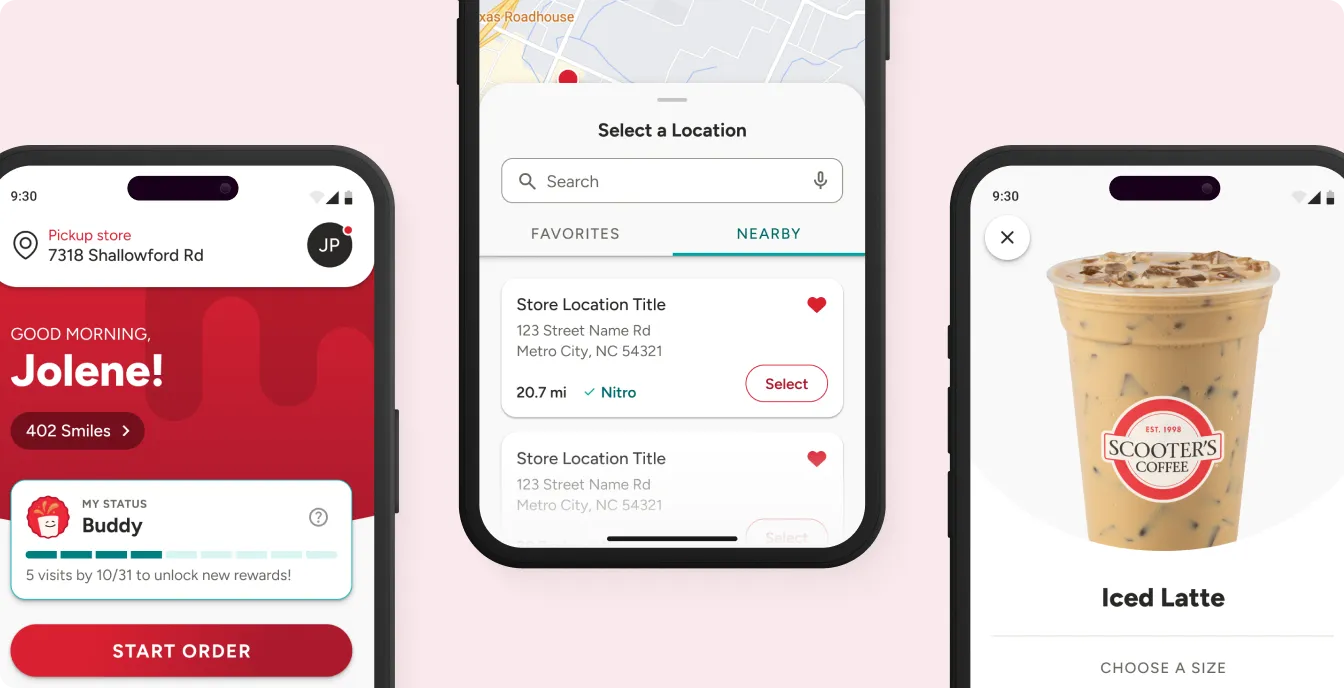
Very Yummy Coffee: a mobile ordering app, a self-service kiosk, a point-of-sale terminal, a kitchen display system, and a menu board, all built with Wingspan on one shared codebase.
Read how Marcus built themInstall it in every agent you use.
Then open a project in your coding agent and try /brainstorm to start your first structured engineering session.
Any coding agent, with the VGV AI CLI
dart pub global activate vgv_ai_cli vgv_ai install It sets Wingspan up in each agent it finds on your machine: Claude Code, Codex, Gemini CLI, OpenCode, Pi, GitHub Copilot CLI, and Antigravity CLI.
Claude Code only, from your terminal
claude plugin marketplace add VeryGoodOpenSource/very-good-claude-code-marketplace && claude plugin install vgv-wingspan Or inside a Claude Code session, one after the other
-
/plugin marketplace add VeryGoodOpenSource/very-good-claude-code-marketplace -
/plugin install vgv-wingspan
Before your first brainstorm.
01 Is Wingspan free?
Yes. It’s open source under the MIT license, and all of it is on GitHub.
02 Does it only work for Flutter?
No. The workflow phases are stack-agnostic by design, so teams on web, native, or embedded systems can use the same loop. The Flutter depth comes from the VGV AI Flutter Plugin, which Wingspan recommends when it detects a Flutter project.
03 Which coding agents does it work with?
Seven today. The VGV AI CLI sets Wingspan up in Claude Code, Codex, Gemini CLI, OpenCode, Pi, GitHub Copilot CLI, and Antigravity CLI, whichever it finds on your machine. In Claude Code you can also install it from our plugin marketplace.
04 Do I have to run all four phases?
No. Brainstorm when a change is big or still open. Already know what you want? Start at /plan. A simple bug fix can go straight to /build with a description, and small changes need no phase at all: describe them in plain words.
05 What does it leave in my repo?
The brainstorm and the plan, as markdown in docs/brainstorm/ and docs/plan/, so the next phase can pick them up. The review reports from /build are deleted once the pull request is ready.
06 Is it ready for production work?
It’s in alpha, at version 0.0.5, and the team iterates on it from how VGV uses it every day. Issues and ideas go on the GitHub repo.








We’ll care about your success as much as you do.
Our unicorns read every message and reply, usually the same day.
Start the conversationA 30-minute call about what you’re building.