

More ideas than a plan? Two weeks to a path you can fund.
Hands-on sessions with our strategists and engineers. You leave with the use cases worth doing, what stands in the way, and a clear route to a working product.
If we’re the wrong fit, we’ll say so.
What teams said after the assessment.
- Braver
“Very Good Ventures’ assessment of our mobile application codebase has been a game changer for the future of our company. Ever since we’ve followed their recommendations, we’ve been standing on solid ground to build the software that truly enables us to change health care for the better.”
CTO, Braver · Code assessment Mathieu D’Amours -

“VGV took our lifecycle marketing to a new level. A fresh audit and playbook gave us a clear, prioritized roadmap, and their execution unlocked use cases we hadn’t been able to activate on our own.”
VP of Marketing, Blade · Martech Christiana Weller - Medly
“They take the time to really understand your business and your challenges, then tailor a solution with you. They do not show up with pre-planned options and treat you like an undifferentiated client.”
CEO, Medly Marg Patel
Five workshops. Each one ends with something you can act on.
Fixed scope and a fixed price.
Most teams start here
For teams ready to pick a use case
AI workshop
A deep dive into AI for your business. We find the promising use cases, check feasibility, and define the route to a working product, with demos of real tools along the way.
You leave with
- A ranked shortlist of use cases
- A feasibility read on each
- A path to a working product
For executive teams and kickoffs
AI demo day
A fast session that shows what AI tools can already do in your industry, so leadership agrees on what’s possible before anyone commits budget.
You leave with
- Shared language across leadership
- Examples from your sector
- A list of ideas worth a closer look
For teams scaling, handing off, or rebuilding
Code assessment
An expert review of your codebase: structure, scalability, test coverage and architecture. We surface the risks before they get expensive.
You leave with
- A written report
- Prioritized recommendations
- A clear read on what to fix first
For marketing and growth teams
Martech analysis
A look at your marketing stack for redundant tools, data gaps and missed personalization, then a sketch of the future-state architecture.
You leave with
- A map of your current stack
- The gaps and overlaps
- A future-state blueprint
For teams with more ideas than action plans
Opportunity assessment
Your stakeholders in one room to evaluate concepts, prioritize initiatives, and agree on a focused roadmap. Useful for early planning, pivots, or a product team that’s stuck.
You leave with
- Scored and ranked initiatives
- Stakeholder alignment
- A focused roadmap
The problems that stall a good idea.
Most ideas don’t fail on the model. They fail on data nobody owns, code nobody trusts, or a team nobody aligned.
-
AI strategy and prototyping
Real opportunities, weighed for feasibility, with a next step you can fund.
-
Martech ecosystem
Where your tools, data and workflows disconnect, and how to fix it.
-
Code quality
Technical risk and architecture problems, found before they cost you.
-
Prioritization and roadmap
Scorecards and vision frameworks that turn ideas into an agreed plan.
-
Customer journeys
Where users hit friction, tied to the moments that drive engagement.
-
Feasibility and change
Readiness, blockers and a change plan your team can deliver.
Before the first session.
Short answers before you pick one. Anything else, bring it to the first call.
01 How is the AI workshop different from the opportunity assessment?
The AI workshop is for teams ready to pick a use case, and it ends with a ranked shortlist and a path to a working product. The opportunity assessment is for teams with more ideas than action plans. It puts your stakeholders in one room and ends with a focused roadmap.
02 Do the workshops only cover AI?
No. The code assessment reviews your codebase before you scale, hand it off, or rebuild it, and ends with a written report and what to fix first. The martech analysis looks at your marketing stack and ends with a future-state blueprint.
03 What if we already know what we want to build?
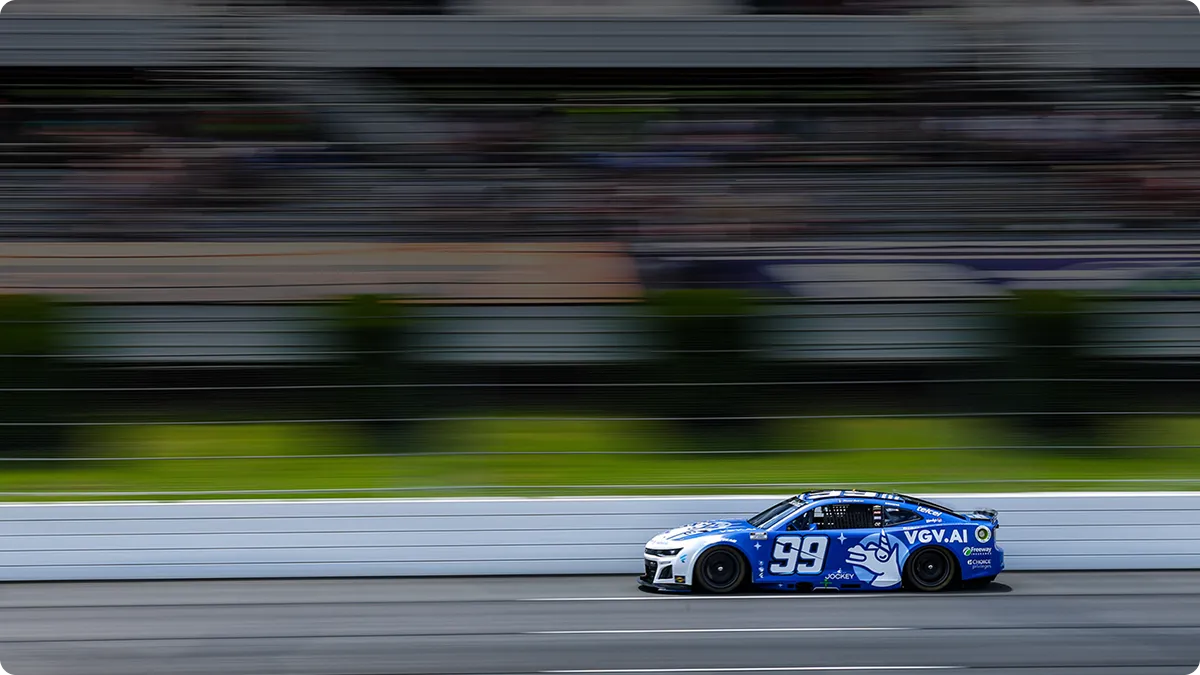
Then the workshop checks it for feasibility first. Trackhouse asked for an iPad app for its pit box. Mapping the whole VIP journey turned that request into a multi-device experience for race day.
04 Have you run a martech analysis before?
Yes. For Blade we audited the Braze setup and delivered a playbook of 34 recommendations in a 6-week engagement, with the first campaigns live before it ended.
05 Do we have to hire you for the build afterwards?
No. Each workshop stands on its own. If you want AI put into a team’s daily work afterwards, that’s AI Enablement, which also measures what it changed.
06 How do we book one?
With a 30-minute call. Laura or Greg takes it, and afterwards you get a written summary of what we heard and what we would do first. If no workshop fits, it says so.




We’ll care about your success as much as you do.
Our unicorns read every message and reply, usually the same day.
Start the conversationA 30-minute call about what you’re building.