


We audited Blade’s Braze setup, wrote a 34-recommendation playbook staged from quick wins to long bets, and launched the first campaigns inside the same six weeks. The target was the second flight, booked sooner.
- recommendations in the Braze playbook
- 34
- from audit to early execution
- 6 weeks
- stages, from quick wins to long bets
- 3
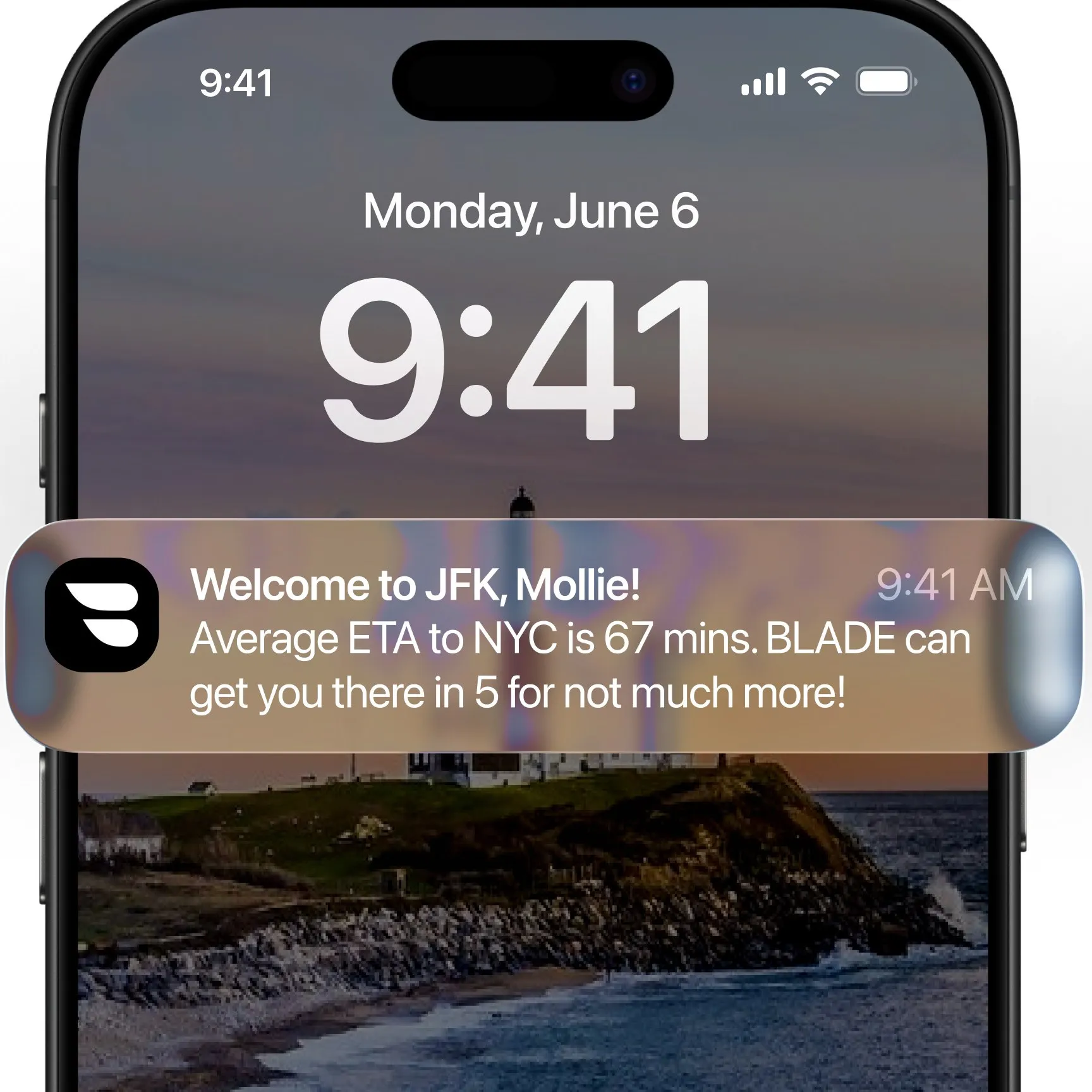
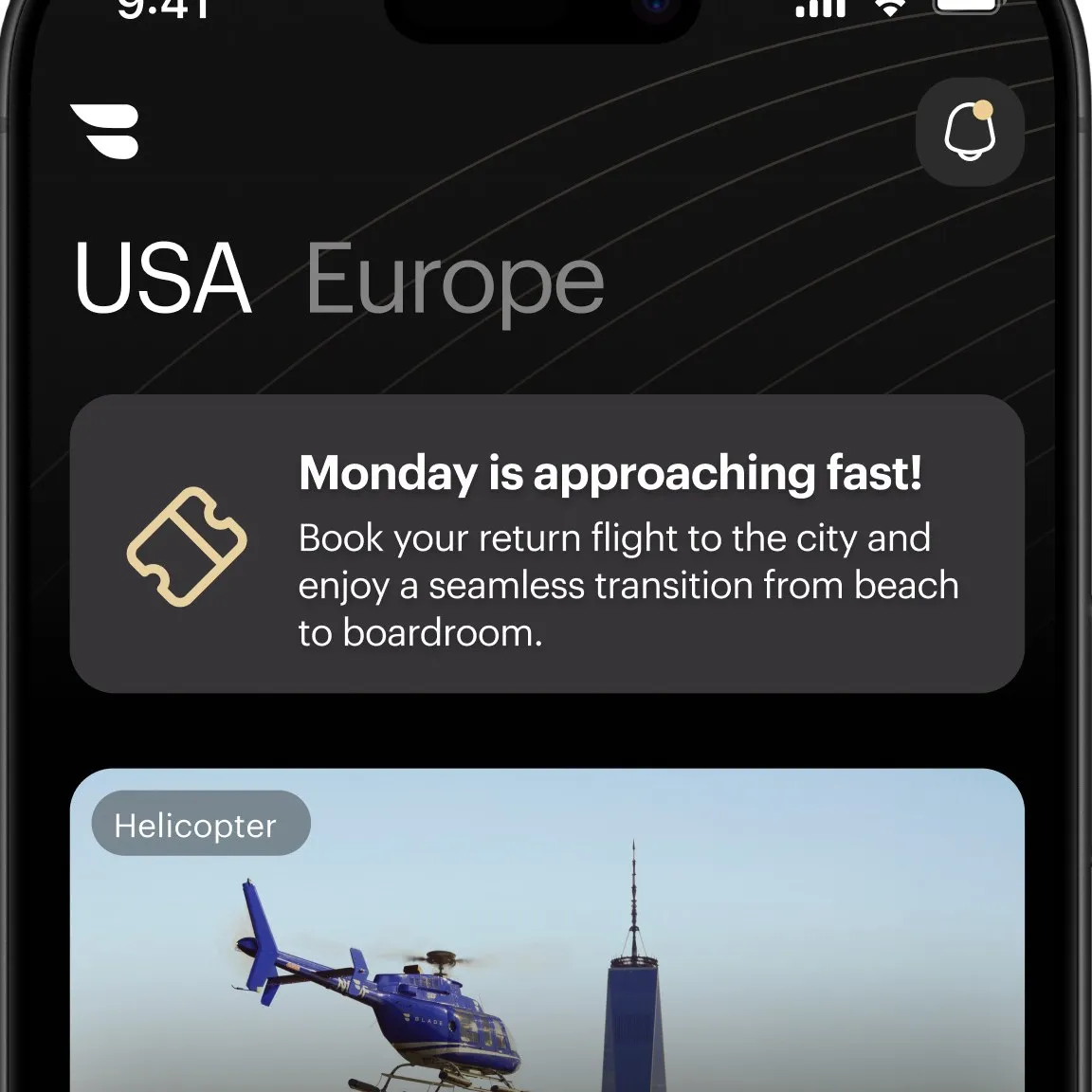
A map of New York with three places, JFK, The Hamptons, and Manhattan, and a phone. Move the flier into a place and the phone shows the Blade message for it: a push welcoming Mollie to JFK, a card for the beach about booking the return flight, and a text about saving 50 dollars on a first flight.
01The ask
Get more fliers to book the second ride, and book it sooner.
Blade had just launched its redesigned Flutter app with VGV. It had flown more than 100 million miles and already paid for a serious MarTech stack in Braze, Segment, BigQuery, and GA4. As first-time Braze users with a lean marketing team, it was using a small part of what Braze can do.
The brief was about repeat behavior. More users through their first and second purchase, fewer passholders who bought a flight pass and never booked a trip, and a shorter gap between the first flight and the next one.
In their words
-
“VGV took our lifecycle marketing to a new level. A fresh audit and playbook gave us a clear, prioritized roadmap, and their execution unlocked use cases we hadn’t been able to activate on our own.”
VP of Marketing, Blade Christiana Weller
02The audit
First, find out what Braze was already doing.
We started with Blade’s whole CRM setup. We went through the active Braze campaigns, checked which key features were in use, and benchmarked email and push against best practice.
The audit found gaps in data architecture, campaign orchestration, and feature use. It also produced a Braze data tracking plan that feeds the new use cases and trims the data points Blade consumes, which makes the account cheaper to run.
03The playbook
34 moves, sorted into Takeoff, Hover, and Fly.
Takeoff plays launch with the setup Blade already had, with no new tools, data, or development. Hover plays need moderate development and richer data. Fly plays need deeper integration, several teams, and more investment, and they carry the biggest upside.
The stages follow Blade’s technical maturity. The team ships the quick wins now and picks up the bigger pieces as the data plan lands.
04The use cases
Messages that know where the flier is standing.
-
-
-
-
-
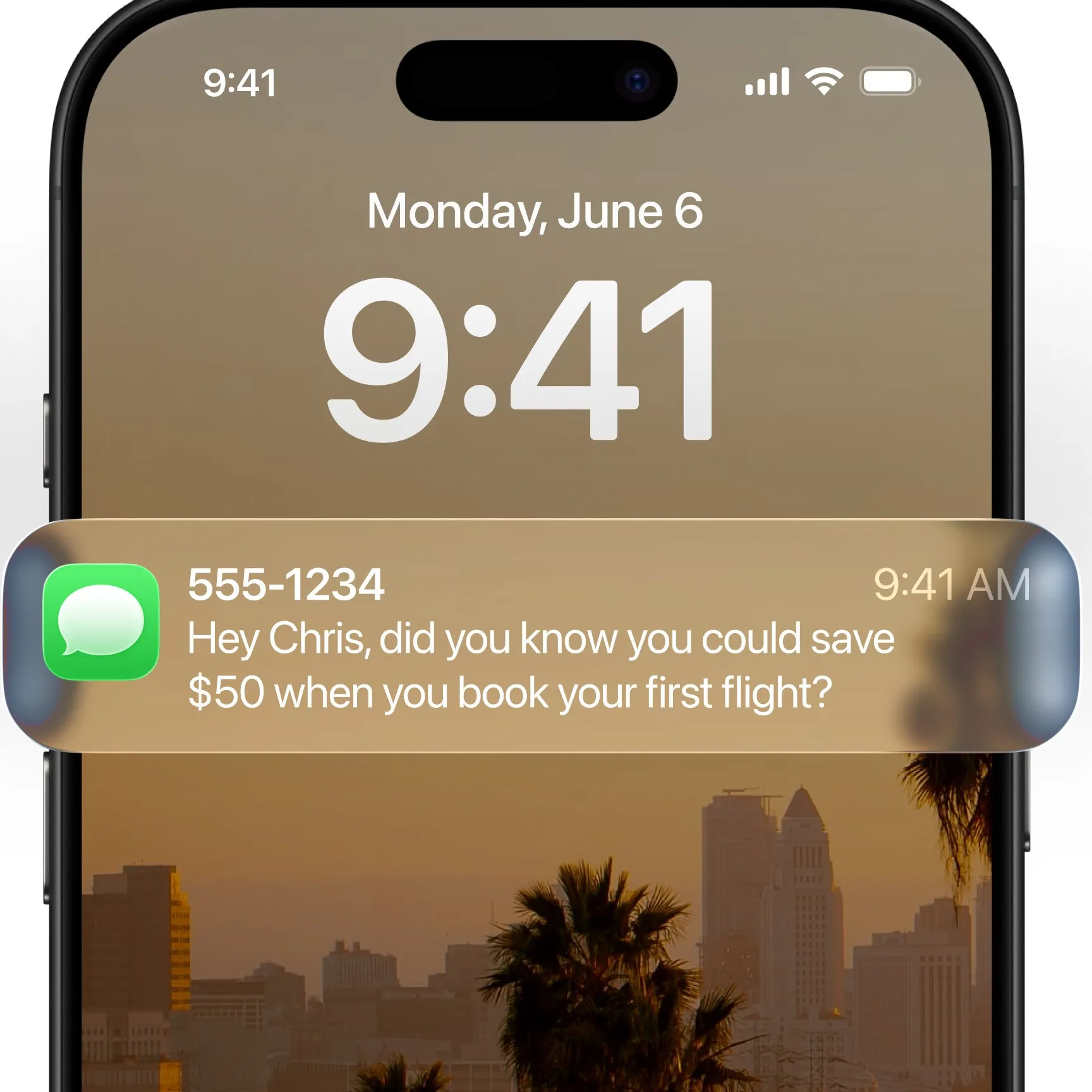
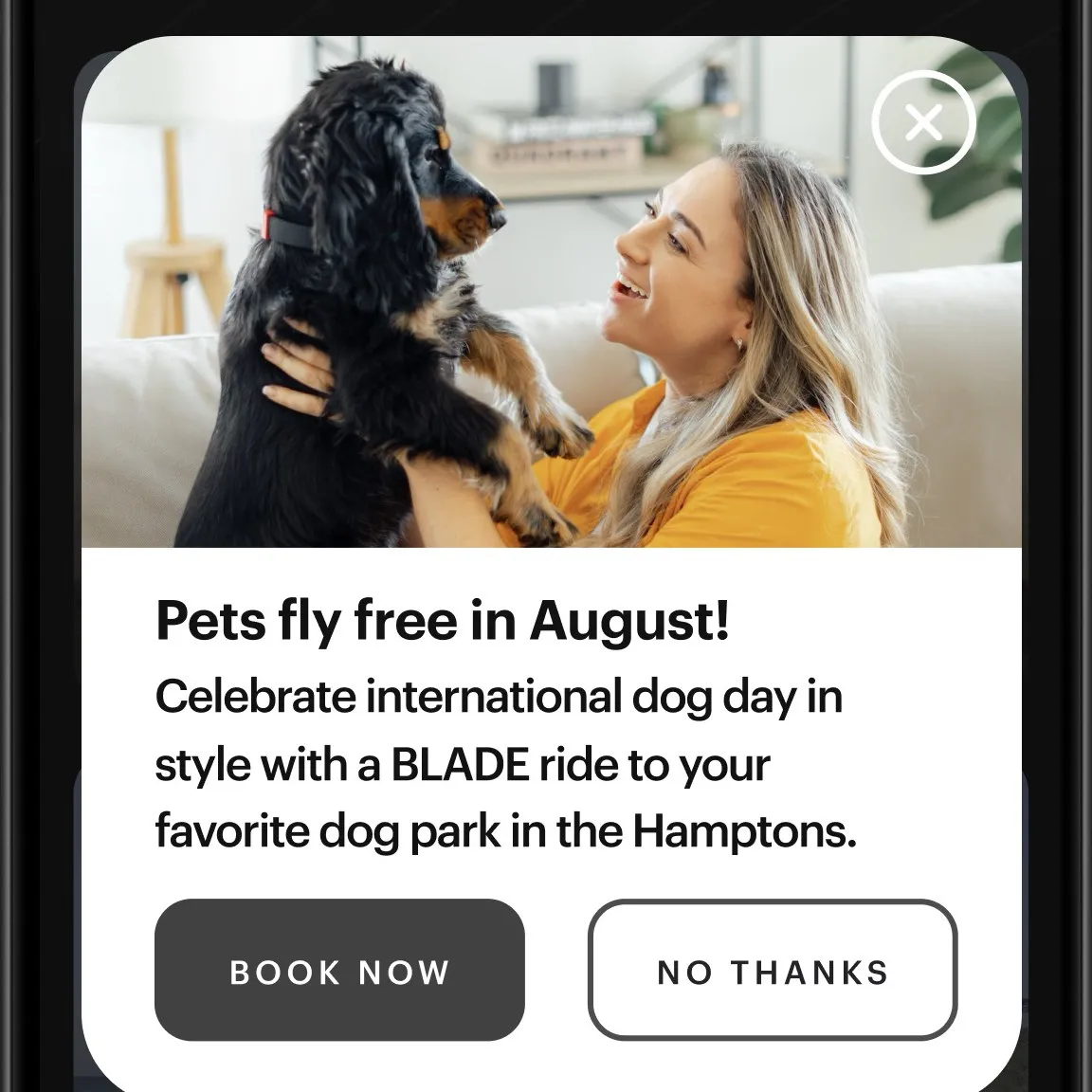
- The playbook also covers contextual permission requests, richer flight receipts, surprise and delight for loyal fliers, Live Activities on iOS and Live Updates on Android, and birthday messages.
The playbook also covers contextual permission requests, richer flight receipts, surprise and delight for loyal fliers, Live Activities on iOS and Live Updates on Android, and birthday messages.
05The build
Email components that change with whoever opens them.
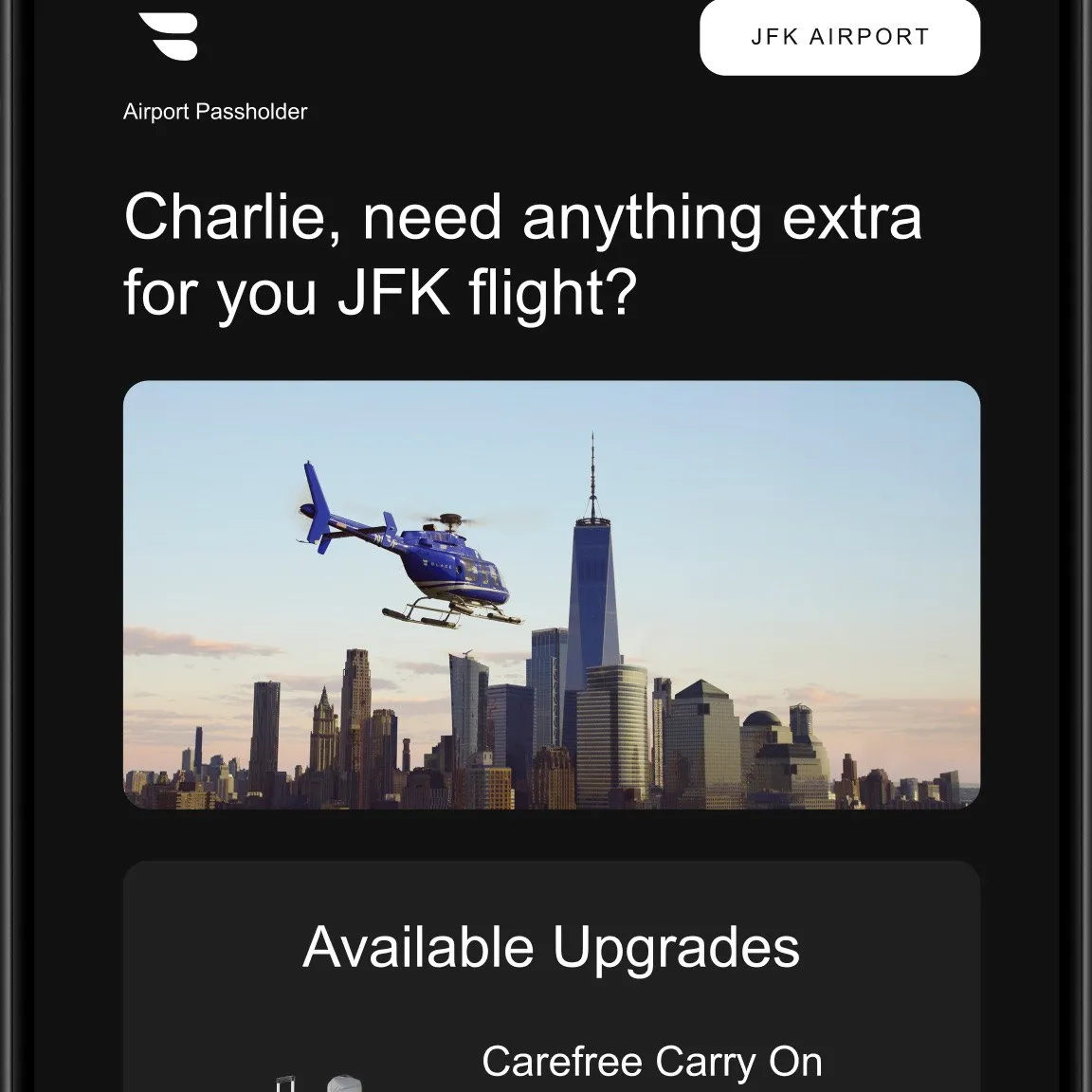
We didn’t stop at the document. The team built and launched a handful of priority campaigns with behavior-driven messaging and AI optimization, starting with a revamped welcome series and new flows for Blade Airport passholders.
We also designed and built a Braze Design System, a custom set of drag-and-drop components coded for Braze. Each one adapts offers, rewards, and nudges to the recipient’s profile and lifecycle stage, so the marketing team builds campaigns faster and keeps them consistent.
06What changed
A to-do list with the order already worked out.
-
The roadmap
What to do first, and why.
34 recommendations, prioritized and staged by the effort and data each one needs.
-
The data
Gaps found before engineering picked its next job.
The audit surfaced the data gaps that set engineering priorities, and the tracking plan cuts data point consumption.
-
The campaigns
A new welcome series and passholder flows, live.
New users get a revamped onboarding series. Blade Airport passholders get flows built for them.
-
The team
Marketers who build their own campaigns.
Figma and HTML training, plus a component-based email system, made Blade’s team more self-sufficient.
07If you’re next
What we’d tell a team in Blade’s seat.
- 01
Audit the stack you already pay for before you buy more. Blade had the tools. The gap was in how much of them it used.
- 02
Sort every idea by what it needs. Plays that run on today’s data go first, and the rest wait for the tracking plan.
- 03
Fix the data plan early. It decides which campaigns are possible and what the platform costs you each month.
- 04
Pick the one behavior you want to move. For Blade it was the second booking, and the use cases were chosen to serve it.
Roll credits.
Who did what, and with which tools.
- Client
- Blade
- Our part
- CRM and Braze auditPlaybook and roadmapData tracking planCampaign build and launchBraze Design SystemTeam training
- Channels
- Email, push, in-app, and content cards
- Built with
- BrazeFigmaHTML
- Timeline
- Six weeksAudit, playbook, early execution
Built by Very Good Ventures
More success stories
All success stories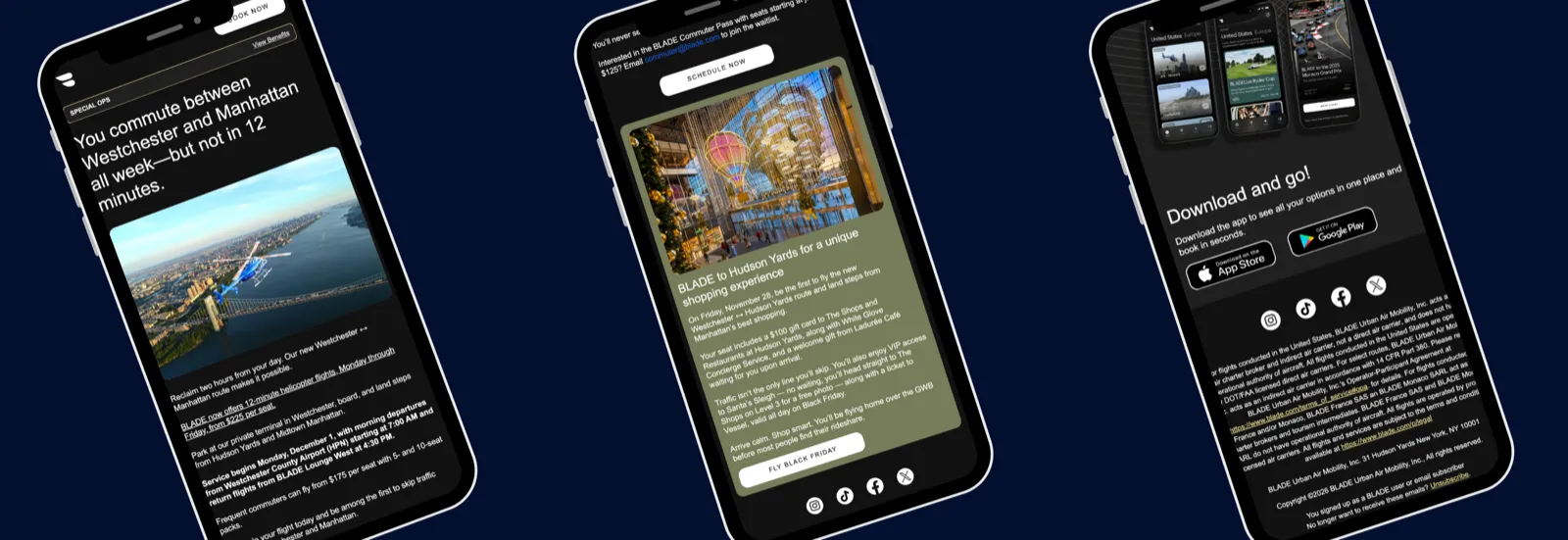
Blade: a modular email design system
A modular HTML email system for faster, on-brand campaigns.
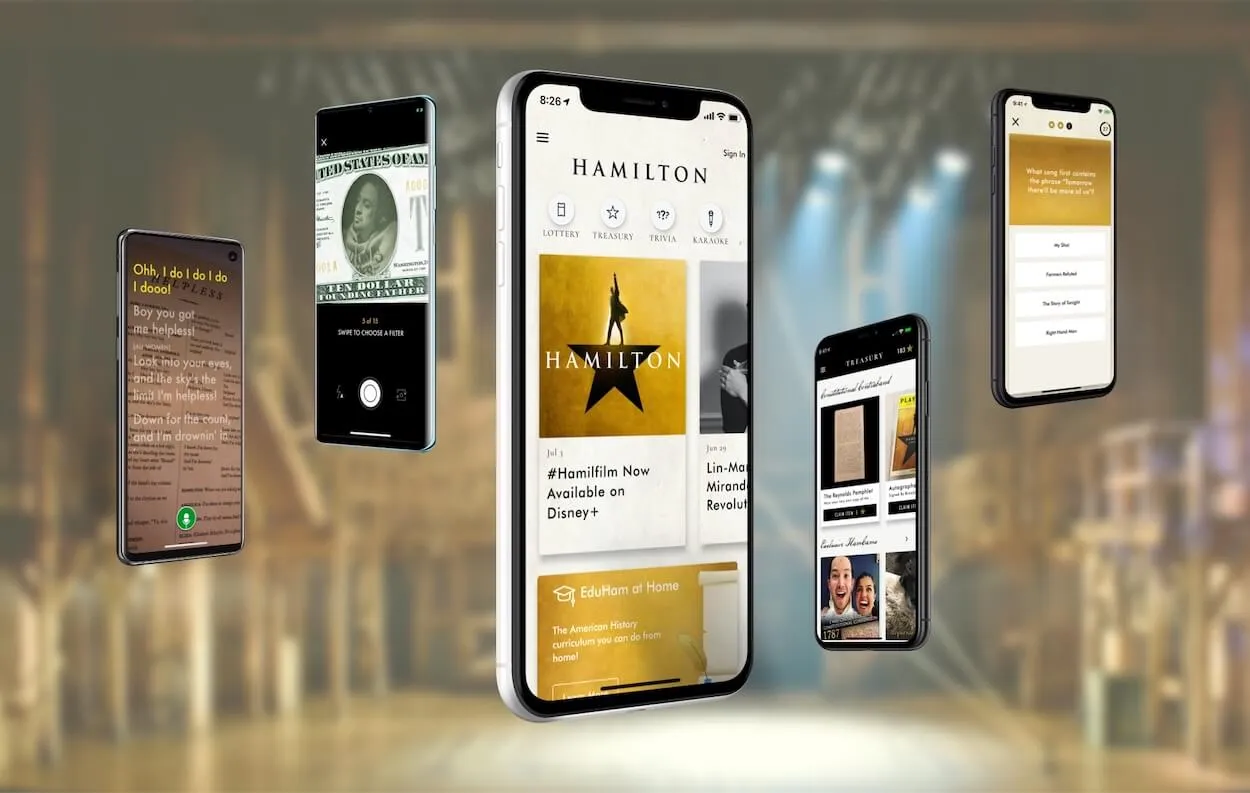
The first commercial Flutter app outside Google

- app installs
- 3.5M+
- peak monthly active users
- 500K+
- lottery entries
- 100M+

Blade’s luxury travel app, rebuilt in Flutter
Reimagining Blade’s luxury travel experience with seamless booking, modern architecture, and a multi-platform mobile app built for speed, elegance, and scale.


We’ll care about your success as much as you do.
Our unicorns read every message and reply, usually the same day.
Start the conversationA 30-minute call about what you’re building.