Very Good Ventures has joined the Claude Partner Network at the Select tier. On projects like Divine and Scooter’s Coffee, our team worked with Claude, powered by Anthropic, from design files to production code.
We’re excited to be part of the network. Our team has put a lot of work into using Claude well and introducing it to teams running Flutter at scale. We have been building with Claude since its launch, have believed in its potential, and have helped our clients grow and deliver with it. Over the last few years, we have seen teams raise the bar of quality across engineering, design, and product when they use AI thoughtfully.
VGV On Craft, Taste, And Judgment
Anyone can get an AI tool to produce code. But those that build successful products, used by thousands or millions of users, know that design, product, and code need to be crafted harmoniously together so you can operate and grow in a predictable, scalable way. This is the part where the speed of AI, and the judgment and taste of the team need to meet in order to delight your customers.
That is where VGV spends its effort. Our team has years of Dart and Flutter behind them, and our designers sweat the details that take a good-looking feature to something that delivers value. Flutter AI engineering makes our team faster, but we don’t let speed get in the way of quality. Ship faster, ship safer has always been our modus operandi, and today we’re excited about what we can achieve with Claude.
What This Looks Like On Real Projects
Two recent engagements show what that looks like in practice.
Divine
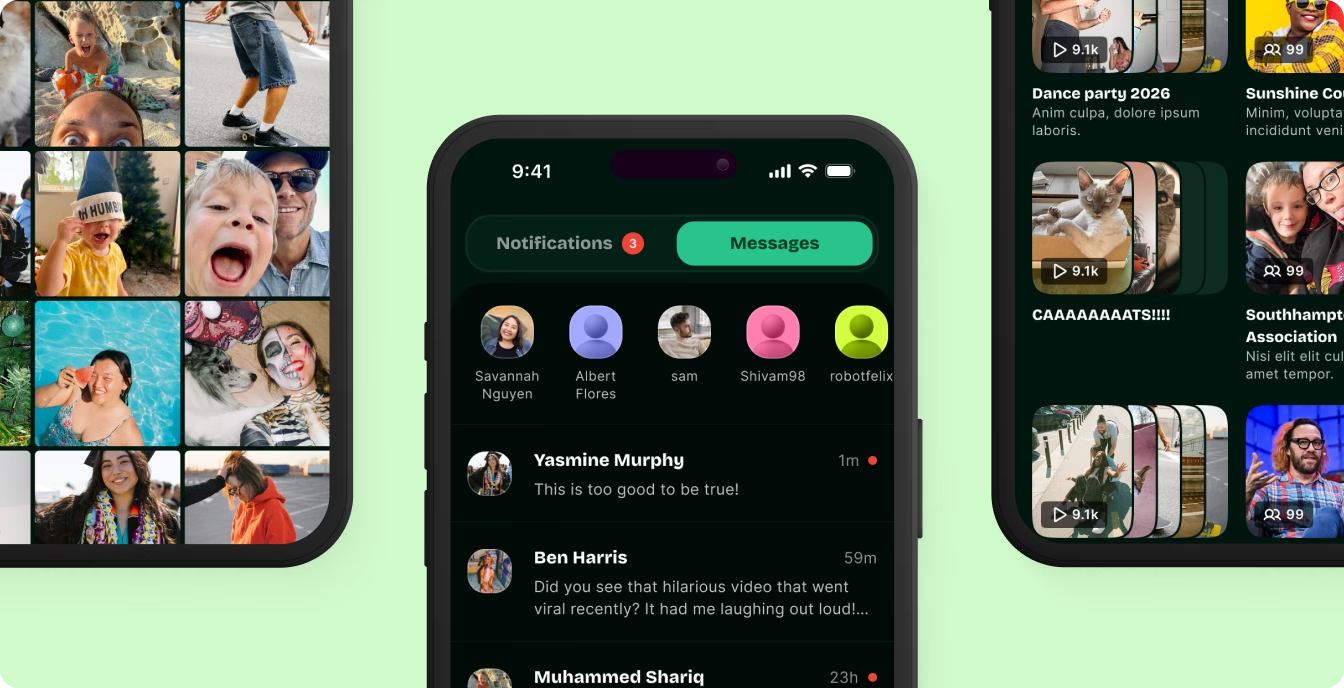
We partnered with Divine, the decentralized short-form video app, on a fast-moving Flutter codebase that had been vibe-coded into existence. It worked, but it wasn’t ready for production. Over 90 days, we worked alongside Divine’s team to stabilize it, introduce structured AI-engineering practices, and shipped it to the stores.
The work ran on a Claude-enabled workflow across design and engineering. Read the full Divine case study.
Scooter’s Coffee
Scooter’s Coffee ran two native mobile apps, iOS and Android, that carry a large share of its revenue. We partnered with Scooter’s Coffee to migrate both apps to Flutter in a single codebase, using a custom multi-agent AI pipeline. Together, we compressed an estimated 6- to 8-month timeline into 3 to 4 months.
The Scooter’s Coffee case study covers how the pipeline works.
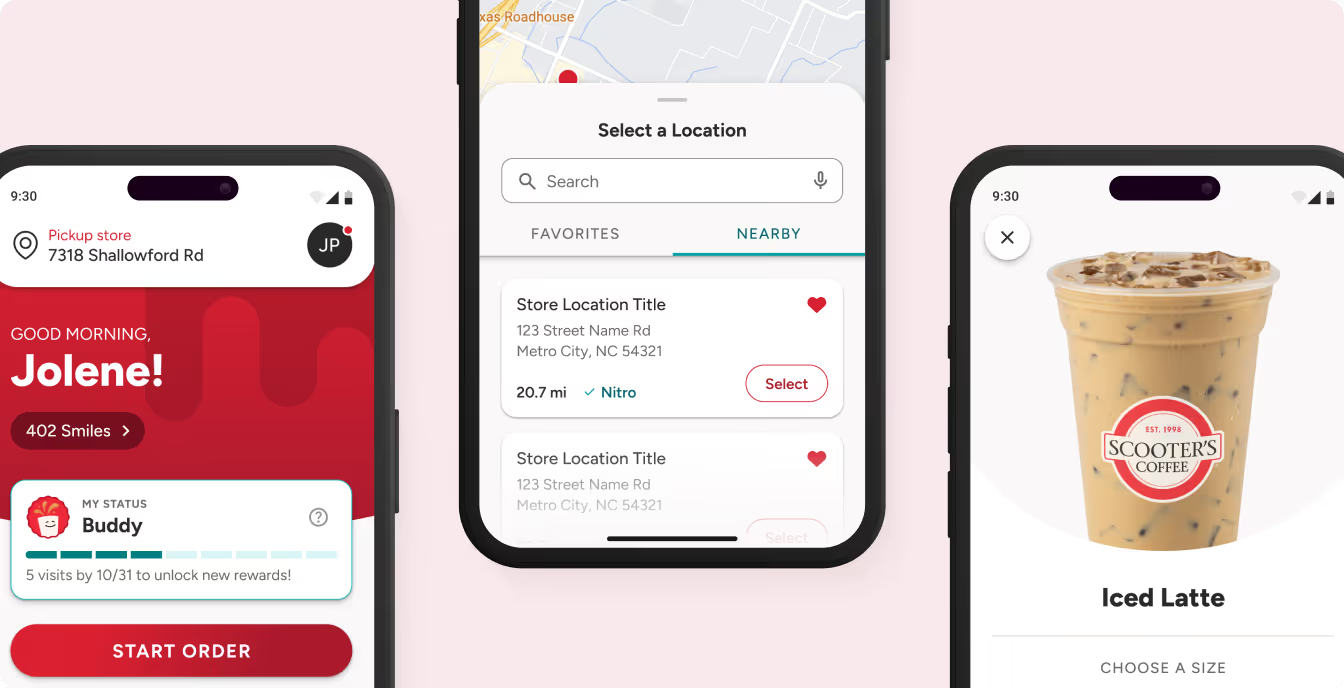
The two projects look different. One rescued a codebase, the other moved a well-established product to a new tech stack. Both ran on the same idea: point AI at the work it does well, and extend it with your own standards and craft through skills, custom agents, and MCP servers. Keep people responsible for the decisions that need taste, and hold the output to the same bar as anything else we ship.
“Our clients want a partner who has already changed how they build with AI, and that’s the work we’ve been doing every day. We bring that hands-on experience to the Claude Partner Network, grounded in years of shipping Dart and Flutter apps at scale.”
Jorge Coca, VP of Engineering
What It Means For Teams Building With Flutter
If you’re building a Flutter app and want to use AI without giving up quality, this is how we work. Our engineers know Dart and Flutter well, and we’ve used Claude and Anthropic’s tooling to deliver real projects alongside our clients’ teams.
That might mean rescuing a prototype that has outgrown itself, as with Divine. It might mean migrating native apps into one codebase, as with Scooter’s Coffee. Or it might mean building something new with AI in the workflow from the first sprint.
We’ll keep sharing what we learn along the way. If one of those sounds like your situation, talk to our team about your Flutter project.