The thesis
The value is in the tail. Start there.
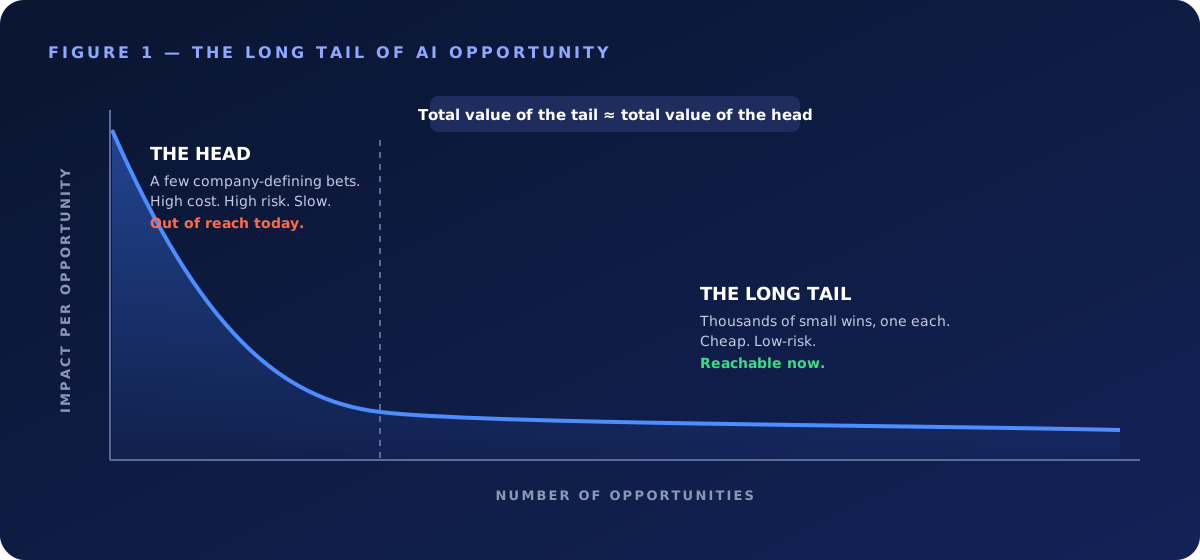
AI value inside a company follows a long tail. A handful of applications carry enormous impact. Thousands carry a little each. Most leaders fixate on the handful. That instinct is backwards. The tail wins first, because its total value rivals the head and, unlike the head, you can reach it now.
Plot it. The x-axis is the number of opportunities. The y-axis is impact per opportunity. The curve drops fast, then runs flat forever. On the left sit the company-defining bets. On the right sit thousands of small frustrations no one ever fixed. The area under the flat part is enormous. It always was. The problem was never that the tail lacked value. The problem was that you could never afford to serve it.
Why the tail was unreachable
Unit economics kept it locked.
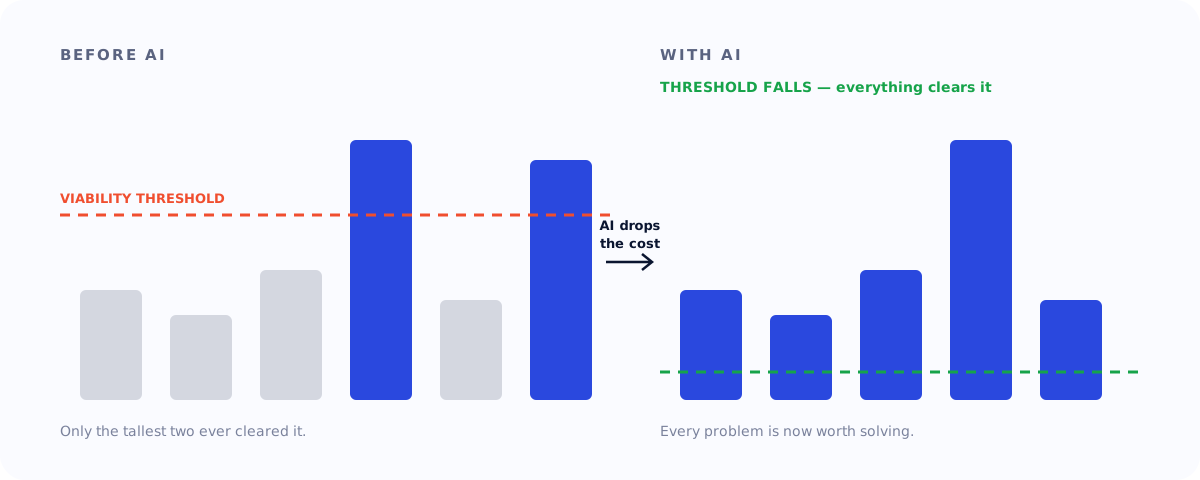
Custom software for one person’s problem never cleared the bar. IT would price the work, weigh it against a backlog of company-wide needs, and shelve it. Correctly. Spending two engineering weeks so one analyst could stop hand-copying a report was a bad trade. So the analyst kept copying, for years, and the company absorbed the waste because the waste was invisible and the fix was expensive.
AI collapses that cost toward zero. The analyst can now build the fix themselves in an afternoon. The bar that protected the backlog is gone. Every n-of-one problem in the building just became worth solving. That is the unlock. Not smarter models. Cheaper builds.
Why the head is a trap
Lead with the moonshot and momentum dies in the deck.
The big applications are real and they matter. They are also slow, costly, and risky. They need new infrastructure, re-engineered process, and a year of change management with a sponsor willing to bet their standing on it. Start there and you spend twelve months in committee before a single person feels AI improve their actual day.
Worse, you are guessing. You do not yet know which big bets will pay, because the organization has no real fluency to judge with. You are picking moonshots from a slide.
Start at the top, then move down
AI adoption flows down, not up.
The instinct to let AI grow up from the bottom is appealing and wrong. An individual contributor sees their own slice. They will solve problems inside their role and never the ones that cut across the org, because they cannot see across the org. Cross-cutting impact has to be recognized and greenlit by someone with the whole picture, and that someone sits at the top.
This does not contradict starting at the tail. The building spreads across the tail, distributed to everyone. The leadership of that building starts at the top and moves down.
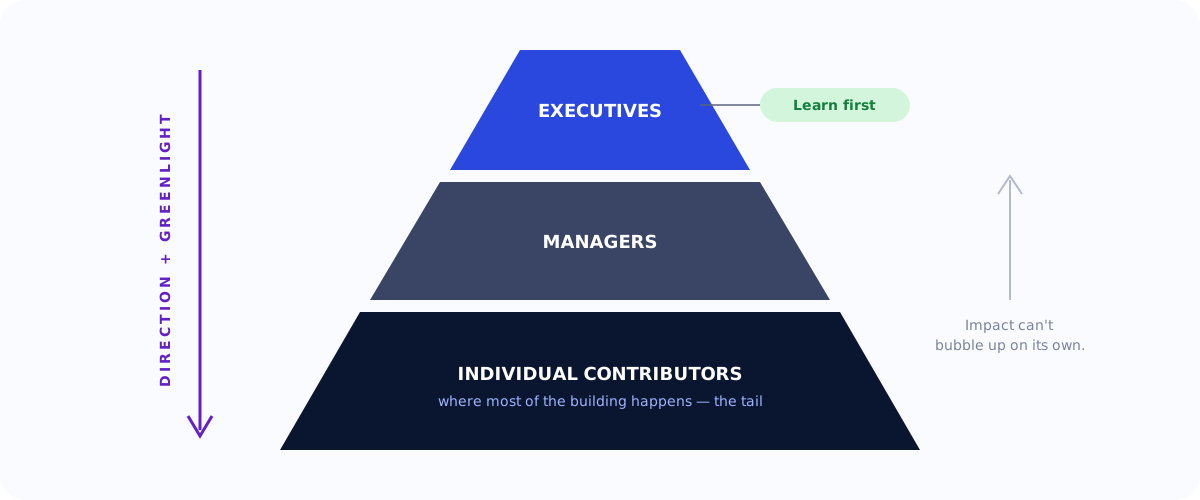
So the sequence starts with executives, and it starts with their own hands on the tools. Leaders must build. They must feel the rush of shipping a working thing in an hour that would have been a quarter-long project request. Part of that is calibration. Until a leader has built, they cannot judge what is now possible, and every AI decision they make is a guess dressed as strategy. The other part is credibility. A team can smell an executive pushing AI because they read about it on a flight. They cannot dismiss one who has built with the tools, felt the power firsthand, and can talk about it without notes.
The executive productivity trap
Then they stop building.
The moment a leader can build is the moment they are tempted to keep building. It feels productive. It produces something. For an executive it is a trap. Time spent heads-down in a build is time not spent on the one job no one else can do, which is seeing and steering the whole system.
The deeper trap is ownership. An executive who owns an artifact has to maintain it, support it, and answer for it. They have become a product manager for a tool, and a product manager cannot also run the company. So executives do not own what they build in the euphoria phase. They build to learn, then they let it go.
Confusing “I can build this” with “I should build this” is how a CEO becomes the company’s most expensive intern.

Point the tools at direction, not delivery
The highest-value thing a leader does with AI.
Once an executive stops building products, they point the same tools at the thing only they can do, which is set vision and direction. AI makes a leader’s communication sharper and more concrete. Instead of a vague charter, they hand a team a fleshed-out brief, a working prototype that shows the intent, a strategy document that already answers the obvious objections. The artifact is not a tool the exec maintains. It is a richer starting point that accelerates the people who do the building.
A clearer ask saves a team weeks of misdirection. A prototype that communicates intent removes a dozen rounds of clarification. The leader’s leverage was always their direction. AI lets them transmit it with far more fidelity.
Seed, then cascade
Find the multipliers.
The executive’s durable output from the builder phase is contagion. Having built, they fund the tools, set the direction, and push the capability down through every layer until it reaches the people who do most of the actual building, which is the rest of the org. Building lands where it belongs, with the people closest to the problems.
In every organization a few people have habits others copy. They are not always the senior ones. They are the ones whose Slack messages get screenshotted and whose shortcuts spread without a memo. Identify them early, give them the best tools and the most rope, and let them pull the rest of the org behind them. One well-placed multiplier beats a mandate.
The tail reveals the head
The tail is a discovery engine for the big bets.
You do not climb from the tail to the head by piling up small wins until they fuse into a big one. The literacy that lets a marketer automate their own reporting is not the change-management muscle that re-architects a core process. What transfers is evidence. When five people on three teams independently build the same scoping helper, you have found a head-of-curve project, already validated by real demand and real usage.
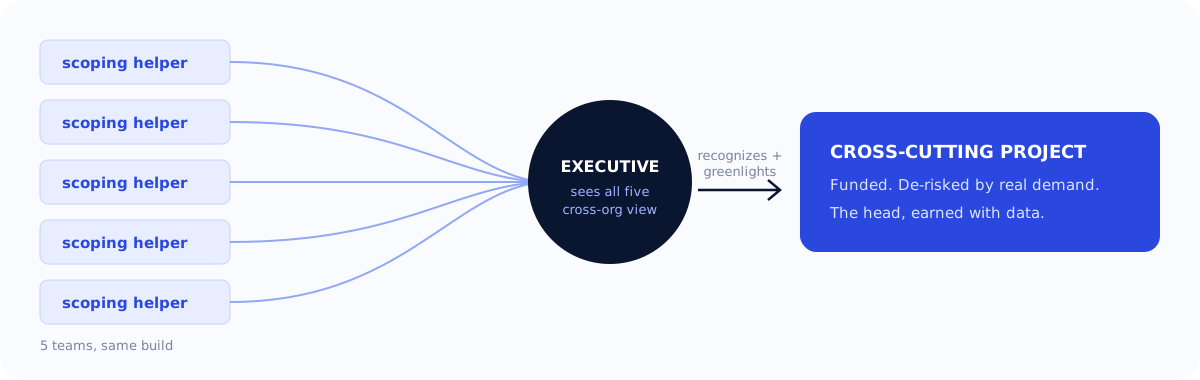
The catch is that only someone with the cross-org view can spot the pattern and act on it. An IC sees their own helper. The executive sees all five, recognizes the cross-cutting project underneath, and greenlights it. You still move left on the curve. You just earn the right to, with data instead of a guess.
The AI adoption operating system
What the organization needs.
Tools and inspiration are not enough. The loop needs scaffolding. Eight things.
-
Tools
Best-in-class AI tools on team or enterprise plans. Not the free tier, not "expense it yourself." Making people pay out of pocket signals that AI is a hobby, not a priority.
-
A clear owner
One person or team owns the initiative, the tools, the passion, and the skills marketplace. They also own the lifecycle. Someone has to retire what no longer earns its keep, or the tail turns into a swamp.
-
A community
A channel where the AI-pilled gather, show what they built, and steal from each other. Adoption is social before it is technical. People build because they watched a peer build.
-
A competency model
Define what AI fluency means for each role and level. Without it, "get good at AI" is a slogan. With it, it is a job expectation you can hire, review, and promote against.
-
Architecture, governance, and data rules
Define how a vibe-coded app earns its way into production, and what data it may touch. For a services firm this is existential. One leaked engagement ends a client relationship.
-
Protected time
Tools without slack in the calendar produce nothing. People need explicit permission and real hours to learn and build. Fund the time or admit the initiative is theater.
-
Measurement, then celebration
Track time saved, errors avoided, cycle time cut, revenue influenced. Then celebrate loudly, by name. Measurement makes the value real. Celebration makes people want in.
-
Consistency via skills and plugins
Package the best work as shared skills, plugins, and internal tools so one person's good build becomes everyone's capability. The highest-leverage item on the list.
Anti-patterns
The predictable ways this fails.
- The executive who delegates the learning. They assign someone to “look into AI” and never touch it, and stay unable to make a good call forever.
- The euphoria that fades. Month one is fireworks. Month three is silence, because the scaffolding was never built and the enthusiasts burned out alone.
- The shelfware build. Something impressive ships, earns applause, and is never used again because it solved a demo, not a job.
- The champion who leaves. The whole program lived in one person’s head and walked out the door. Owners and documentation prevent exactly this.
- The data leak. It only has to happen once.
For a services firm
Run it well and it becomes the product.
If you sell engineering and design, this playbook is also a product. Your own internal adoption is the proving ground for the methodology you bring to clients. Run it well and the way you transformed your own company becomes the strongest thing you can sell, because you can show the scars and the receipts. Eat your own cooking first. Then put it on the menu.
The whole thing in two lines
Start at the tail and earn your way to the head. Keep your leaders out of the build and in the system.