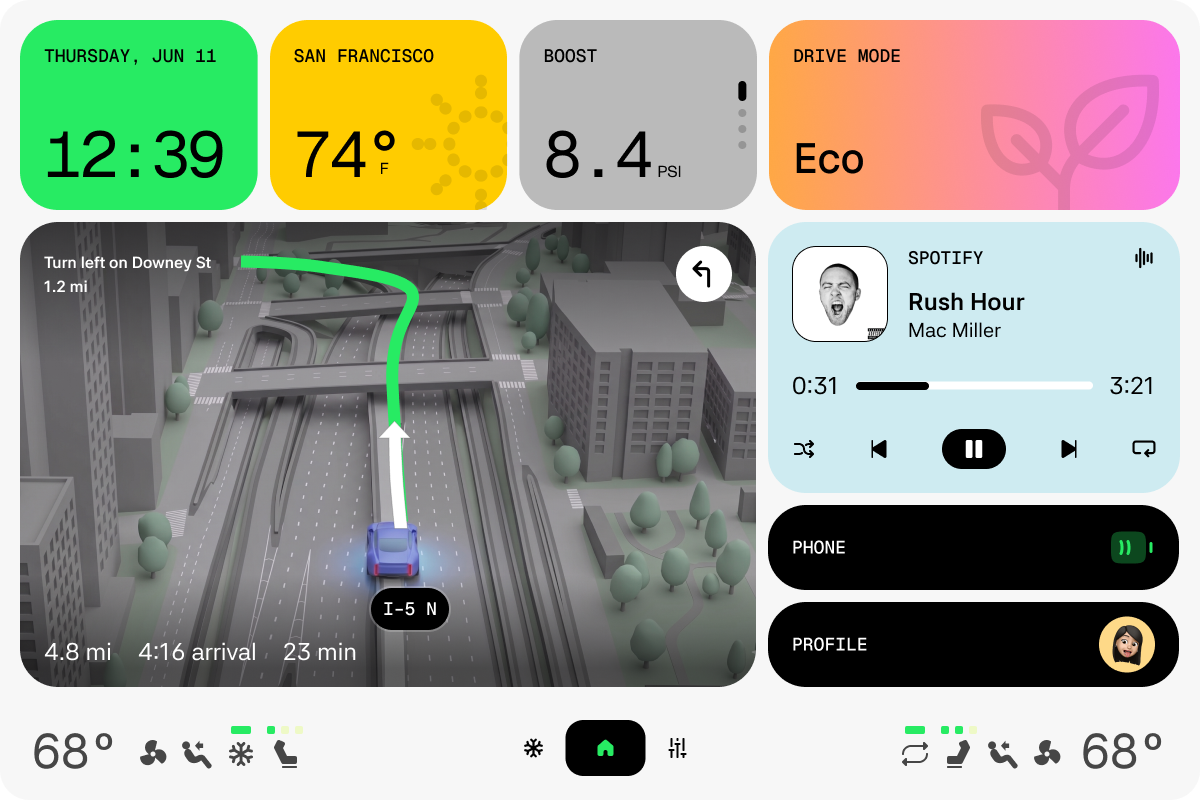
Flutter running inside a vehicle is a different engineering discipline than Flutter running on a phone. The display is a fixed panel, not a flexible canvas. The hardware is locked down and thermally constrained. The operating system is built for automotive grade reliability, not developer convenience.
We’ve spent years working inside those constraints, shipping production IVI software in Toyota vehicles, building applications across BMW and MINI, and pushing Flutter’s render pipeline to its limits in NASCAR systems as part of our partnership with the Trackhouse team.
Today, we’re formalizing that work: VGV has joined Automotive Grade Linux (AGL).
“Our work with VGV helped us to bring production-ready Flutter to in-vehicle infotainment. They understood from day one that automotive software is a different discipline, and they delivered accordingly. Their AGL membership is a natural extension of that work, and we look forward to continuing to build together.”
Chris Casey, Executive Director of Engineering, UX & In-Vehicle Software
Why AGL, Why Now
Automotive Grade Linux is a shared, open source platform for automotive software development used by major OEMs and Tier 1 suppliers worldwide.
Flutter joined that story with AGL’s UCB 14 platform release, which formally added it as a supported framework for IVI development. Subsequent releases deepened the investment. For us, this trajectory confirmed what years of project work had already shown: Flutter delivers the reliability and performance that automotive HMI demands.
AGL membership gives us working group access, reference hardware, and a direct channel into the development process, right where the hard problems are being solved. We joined to contribute, not just to participate.
The Work That Led Here
Our AGL membership didn’t come from abstract interest in automotive software. It came from shipping production software in real vehicles.
We partnered with Toyota to build Flutter-powered IVI systems, managing frame budgets on fixed hardware, adapting Flutter’s rendering pipeline for non phone displays, and meeting the certification standards automotive OEMs bring to their software supply chain.
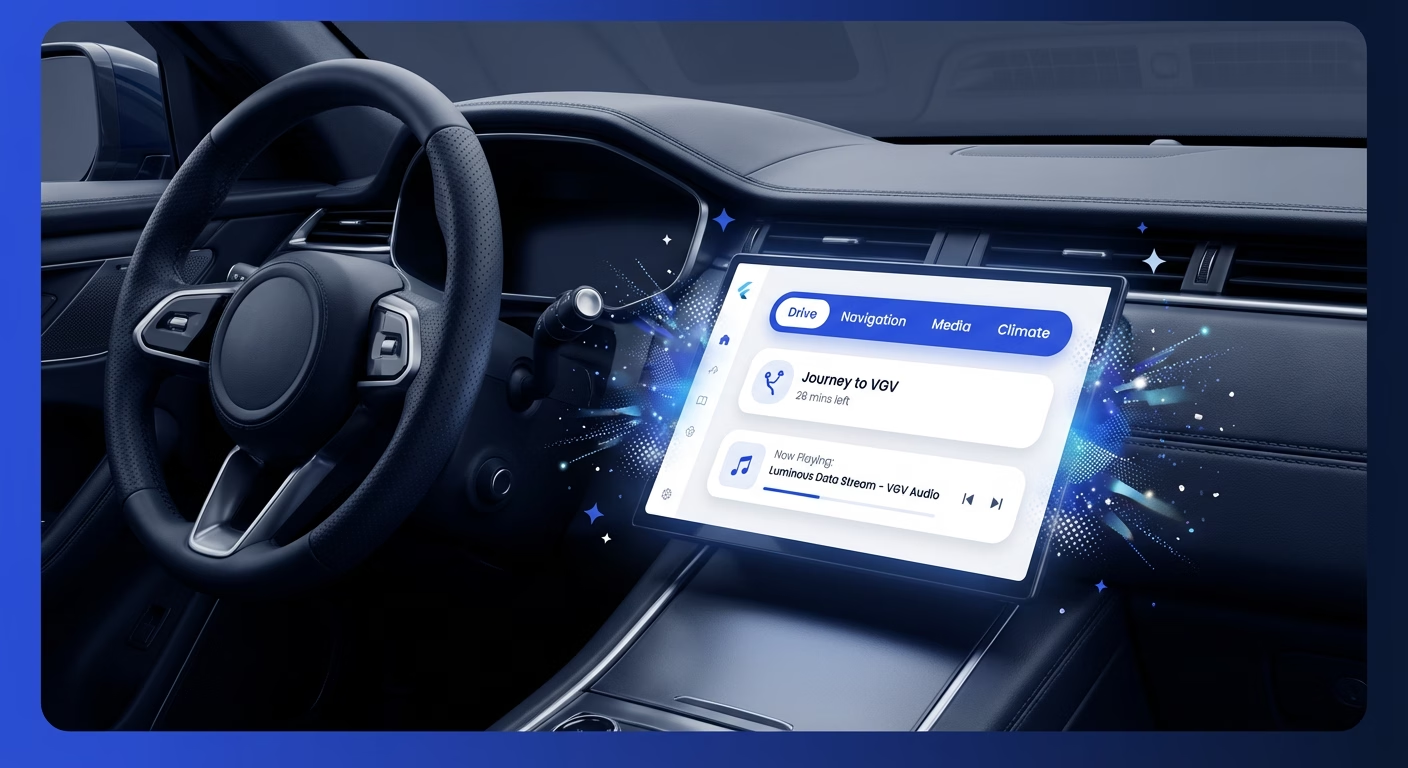
Two members of our leadership team, Kevin Rogers and Jorge Coca, led Flutter implementation across BMW and MINI before joining VGV. Two vehicle brands, different design languages, one shared platform architecture. Flutter’s single codebase model doesn’t just reduce development cost, it changes the engineering conversation between platform teams and brand UX teams entirely.
We also partnered with the Trackhouse NASCAR racing team, where real-time telemetry has zero tolerance for latency. Every millisecond of render time is visible. That discipline shapes how we approach every performance critical Flutter engagement.
We also contributed to Fluorite, the first console-grade engine fully integrated with the Flutter framework. This contribution is of tremendous importance in rendering 3D models inside the vehicle, as Fluorite is engineered to utilize Google’s Filament renderer and modern APIs like Vulkan to deliver hardware-accelerated, console-quality graphics optimized for lower-end and embedded automotive hardware.
What We’re Building in the AGL Ecosystem
VGV maintains a significant open source presence in the Flutter community. Packages, tooling, and infrastructure that other development teams rely on in production. We’re bringing that same approach to AGL: find shared engineering problems, build solutions in the open.
The priorities: compositor level work with Wayland and Weston, performance tooling for resource constrained automotive hardware, and reference implementations that help teams adopt Flutter for IVI without rebuilding integration work from scratch.
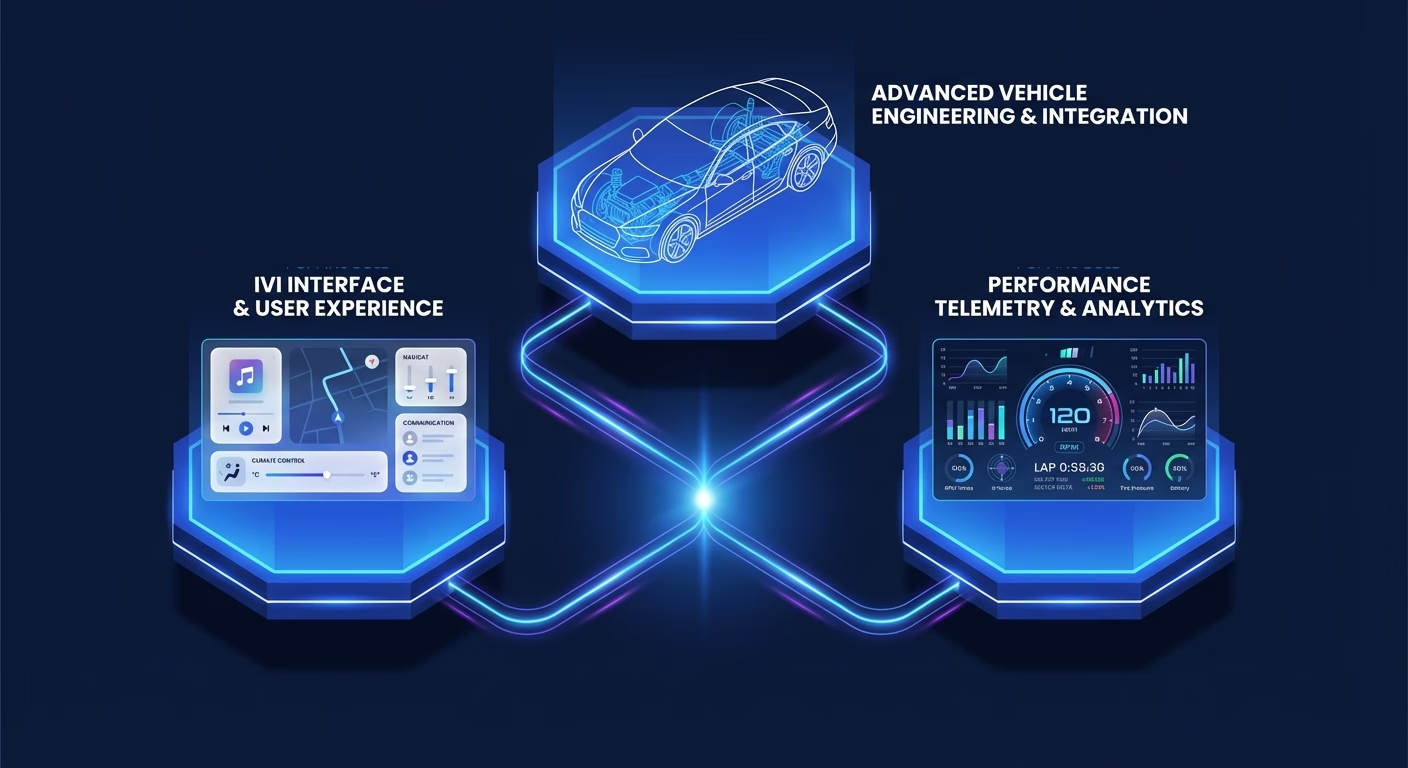
“We are pleased to welcome Very Good Ventures to the Automotive Grade Linux community”, said Dan Cauchy, Executive Director of Automotive Grade Linux. “Their contributions to the Flutter ecosystem, including their work on Fluorite, reflect the collaborative spirit that drives AGL forward. We look forward to their participation and the technical contributions they will bring to the community.”
The GenUI Horizon
Flutter’s rendering model is a natural fit for Generative UI interfaces that adapt dynamically based on driver preferences, route context, or live vehicle data. In practice: in-vehicle experiences that reconfigure based on who’s driving, what’s active, or what the vehicle needs to surface. Not just responsive to input responsive to state.
We’ve been developing these ideas in our project work. AGL is the right community to work through them in the open, alongside the OEMs and suppliers who will actually deploy them.
See Us in Tokyo
We’ll be presenting next month at the AGL All Members Meeting in Tokyo: One Codebase, Every Screen: Architecting Multi-Display Flutter Experiences Across Automotive. Come find us.

Let’s Build It Together
The software defined vehicle is already here. Flutter’s position in that reality is growing because teams are shipping real software on real hardware inside real vehicles. Our AGL membership is the next step in years of production automotive Flutter work.
If you’re building Flutter for automotive, embedded Linux, or in-vehicle infotainment, we want to talk. Reach out to start the conversation.