Today, we’re happy to announce the first alpha release of VGV AI Flutter Plugin, our collection of Flutter and Dart best practices for the AI-assisted engineering era.
We built the VGV AI Flutter Plugin because we’ve seen firsthand that best practices are only useful if they’re accessible in the moment you need them. This is our collection of battle-tested best practices for Flutter and Dart, now embedded directly into Claude Code to help your team apply proven approaches without losing context or productivity.
The plugin is built on the foundation of our Very Good Engineering collection of best practices, which has been proven in production across large consumer applications and diverse Flutter teams. These aren’t theoretical guidelines—they’re patterns and principles extracted from real-world work at scale.
Why Battle-Tested Best Practices Matter
Developing Flutter applications at scale requires more than individual skill—it requires consistency, clarity, and judgment that compounds across teams. The patterns we’ve codified in this plugin solve the real problems we encountered while building consumer-grade applications used by millions of people. We’ve learned what works when a codebase grows, when teams distribute across time zones, and when code quality determines user experience.
That experience—combined with Claude Code’s ability to understand context and intent—creates something new: AI-assisted development that doesn’t just accelerate typing, but enforces judgment.
How It Works
The plugin brings five core engineering skills directly into your development workflow:
- Accessibility: Ensure your Flutter widgets meet WCAG standards and are usable by everyone.
- Performance: Identify rendering bottlenecks and optimize widget composition.
- Documentation: Generate clear, intention-driven code comments and docs.
- Testing: Write comprehensive tests that improve code reliability and provide feedback loops for AI agents.
- Design Patterns: Apply proven architectural patterns for state management, widget composition, and code organization.
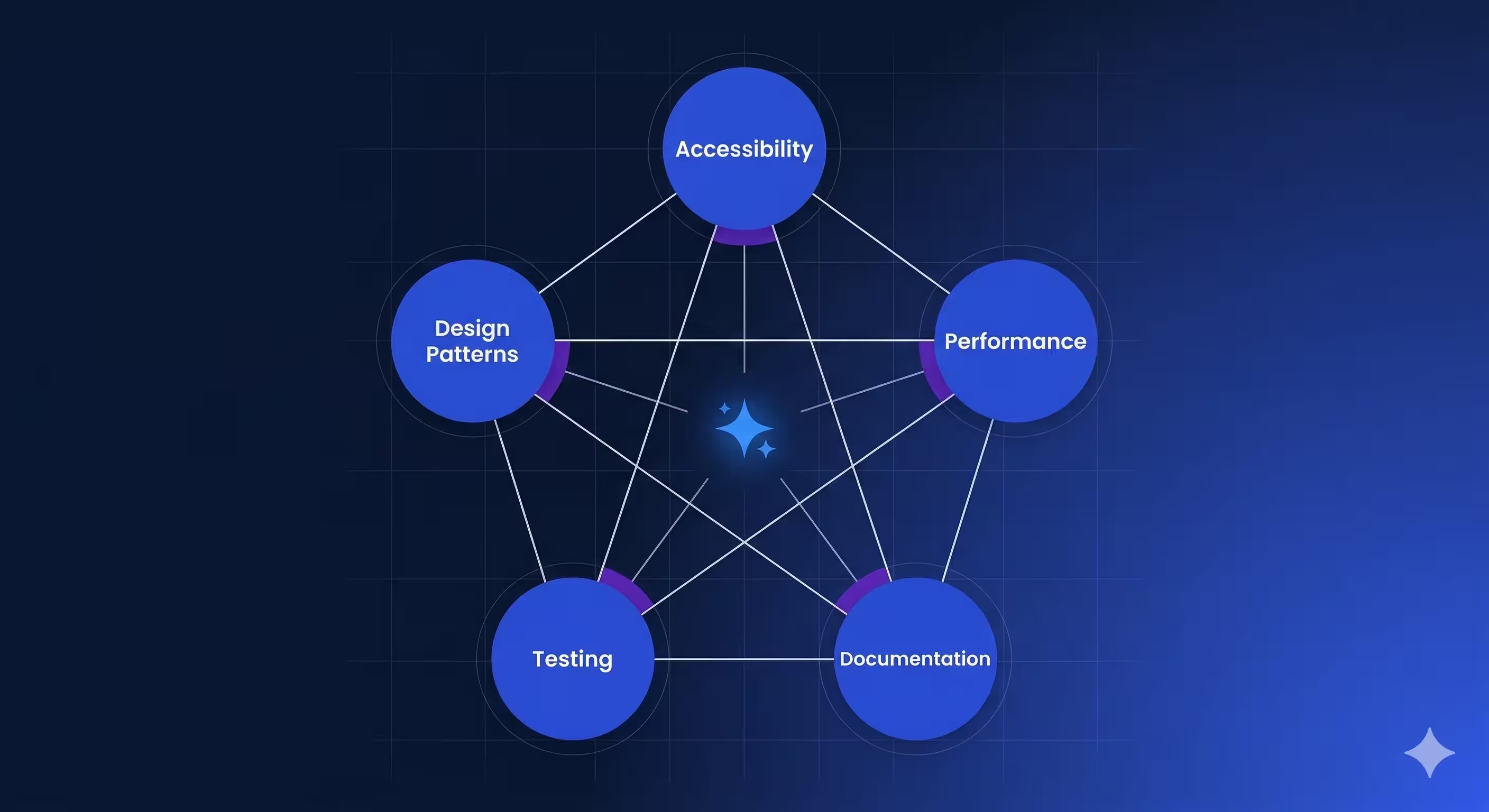
These skills work together as a system. Strong design patterns make code readable for AI agents. Clear documentation provides context for intelligent suggestions. Comprehensive testing creates feedback loops that improve both code quality and AI-assisted development workflows.
An Example: The Accessibility Skill in Action
Accessibility is where best practices and quality code converge. When you build with semantic widgets, clear information hierarchies, and WCAG compliance in mind, you’re not just making your app usable—you’re making your code clearer, more maintainable, and more compatible with AI-assisted development.
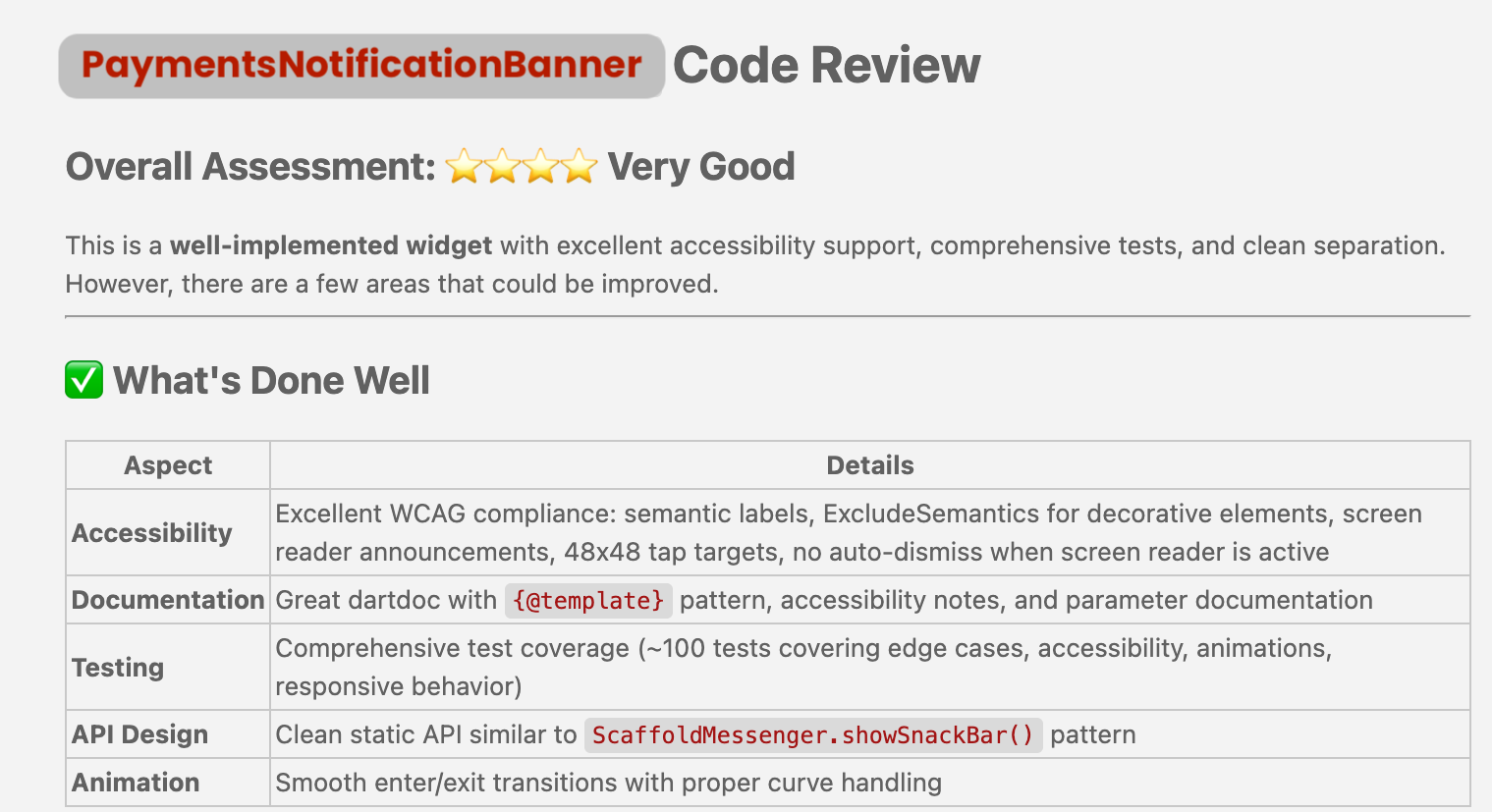
The accessibility skill in the plugin reviews your widget structure, checks color contrast ratios, validates keyboard navigation, and suggests improvements in context as you develop. Here’s what this looks like in practice:
Our Approach: Claude Code First
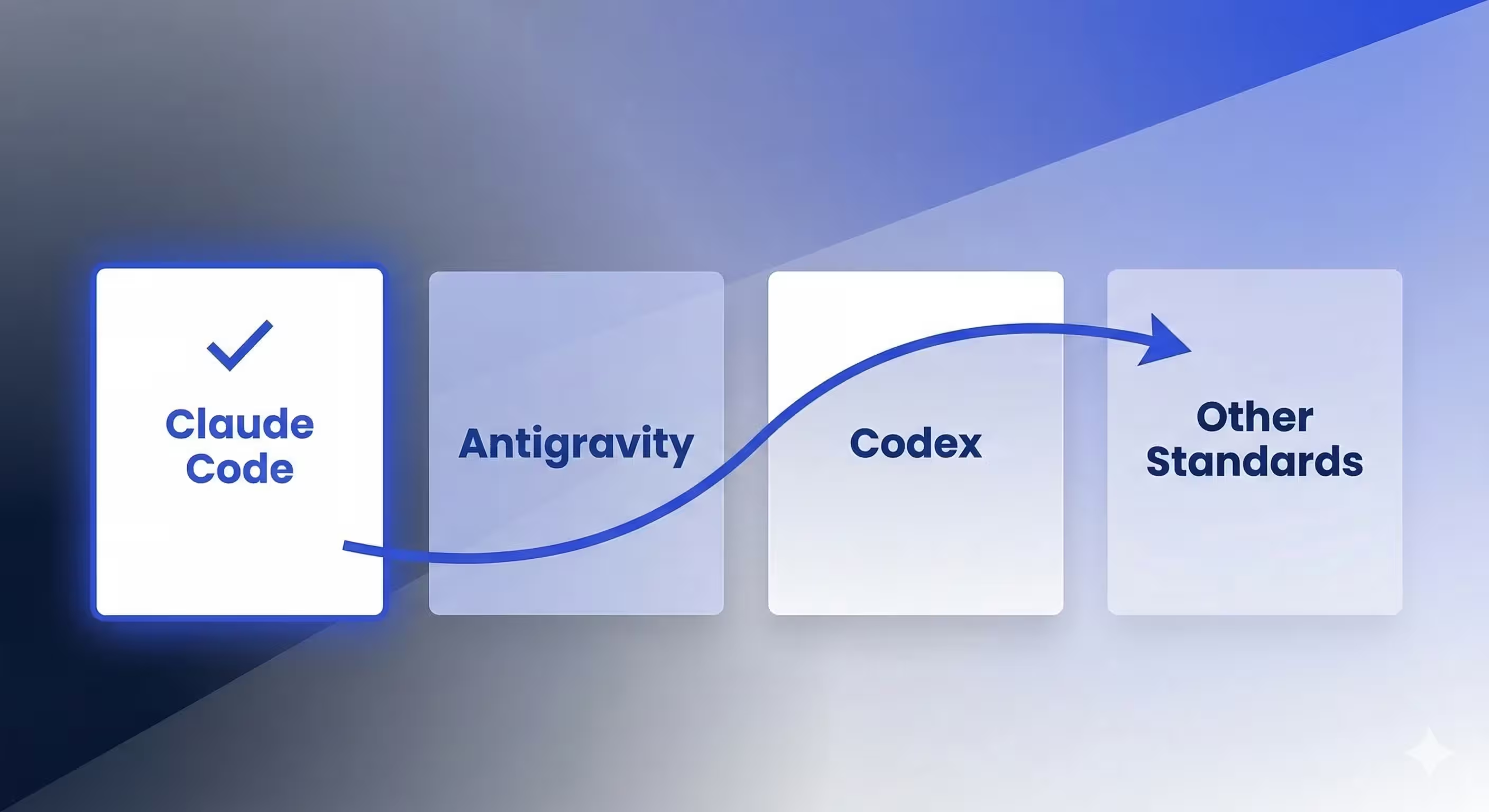
This marks VGV’s first open-source venture into AI-assisted engineering tooling, and we’re leading with Claude Code because we’ve found it best honors our philosophy of contextual, thoughtful development. You don’t lose your train of thought switching between tools. Claude Code understands your code’s intent and can apply best practices intelligently, not mechanically.
Support for additional AI development platforms is on our roadmap. We’re already building integrations with other AI-first development environments, and we’ll share updates as those efforts progress.
Why This Matters for Your Teams
The ecosystem is establishing new norms around AI-assisted development. Tools are proliferating, but best practices for how to work with those tools are still being defined. Our plugin positions your team ahead of that curve—you’re not just using Claude Code, you’re using it with judgment built in.
This is especially valuable for large teams. When best practices are codified in tooling, they scale without constant reminders or code reviews. When new team members join, they inherit your team’s standards automatically. When you’re thinking through a complex architectural decision, your AI assistant isn’t just speeding up implementation—it’s guiding you toward decisions that have worked at scale.
How to Get Started
The VGV AI Flutter Plugin is open source and available now. You can explore the repository, documentation, and examples at the VGV AI Flutter Plugin GitHub repository.
For teams already using Claude Code, setup takes minutes. For teams new to AI-assisted development, we’ve included step-by-step integration guides and examples that show how to integrate the plugin into your existing workflow.
What’s Next
We’re excited about the momentum in AI-assisted development and Flutter’s readiness for the AI era. This plugin is the first of more efforts we’re building to help teams apply best practices with AI tooling. We’re already working on complementary tools that will enhance your AI-assisted engineering workflows, so teams of all sizes can apply a systematic approach to a new era of engineering.
We also want to hear from you. The plugin is open source (VeryGoodOpenSource/vgv-ai-flutter-plugin), and we welcome feedback, contributions, and use cases from teams using it. Share your experience, file issues, suggest features, and contribute patterns that work for you and your team.
Learn More About Very Good Engineering
Our engineering philosophy extends far beyond this plugin. Explore the Very Good Engineering collection to dive deeper into the principles behind these best practices, and check out our blog for detailed guides on Flutter architecture, testing strategies, and accessibility implementation.
VGV is deeply committed to advancing engineering excellence at scale.